
- July 17, 2026
- Posted by: Admin HRCommunity
- Category: Blog
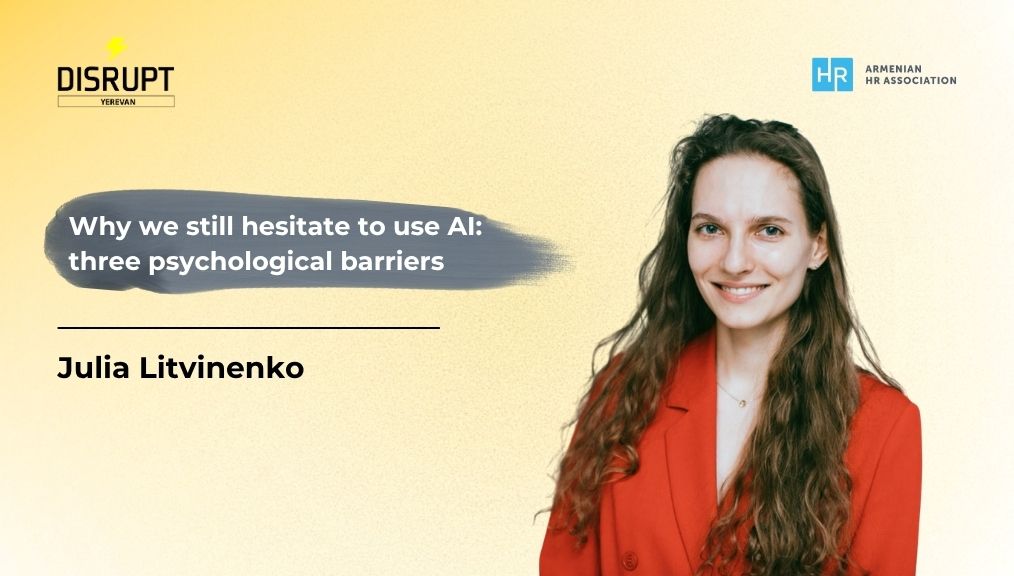
Artificial intelligence is no longer a distant trend in HR. Each major technological shift has reshaped our profession: computers in the 1970s, the internet in the 1990s, mobile ecosystems in the 2010s. Generative AI represents a shift of similar magnitude. It is already influencing how organizations define talent, leadership, and enterprise capabilities.
In leading Western companies, AI literacy is becoming part of leadership and potential models. As generative AI takes over more operational and analytical tasks, the profile of leadership itself is shifting: less direct control, more facilitation and strategic guidance.
That’s a sign for us in HR that soon we’ll be assessing AI literacy the same way we now assess communication or strategic thinking.
Adaptation has also always been part of our mandate: we help others navigate technological shifts in their roles, which means we cannot remain observers ourselves. We don’t need to be “AI evangelists,” but we can be confident, competent users.
And yet, despite this momentum, many HR professionals still use AI less than we could. The hesitation often appears to be psychological rather than ethical or ideological.
- Conservatism: “I’m Fine as I it is”
Caution toward new tools is natural. Familiar routines feel efficient and reliable. It is easy to think: “This works well enough,” “It’s not fully tested yet,” or “There’s no time to experiment.” Stability has value — especially in functions responsible for people and risk.
Technology, however, does not share this instinct. It advances regardless of personal readiness. Electricity, computers, and the internet all followed this trajectory, and AI is no exception.
One practical way to move beyond conservatism is to treat AI as a new hire. Start with small, low-risk tasks—grammar checks, email drafts, first versions of documents. No one assigns a complex strategic project to a new employee on day one. Trust builds gradually. The same principle applies here: small tasks, feedback, calibration, and then broader responsibilities.
- Lack of Understanding: “I’m Not Sure How This Works”
Not long ago, many algorithms were called “AI”. No wonder we grew skeptical. But modern generative AI is different: it doesn’t simply follow rules, it can create because it works with the context.
In Assessment & Development, for example, generative AI can significantly accelerate work: job and skills profiling, development of assessment tools, initial processing of qualitative research, interpretation of test profiles. Tasks that once required several hours of expert time can now be completed faster—often at comparable if not better quality—when AI is used thoughtfully.
AI resembles an overqualified employee: highly capable, but only effective with clear direction. Its value depends on the quality of prompts, context provided, and feedback given. When you deliberately set aside time to experiment — adjust prompts, add context, refine instructions — you start to get a sense of how how AI works. Practice builds familiarity and confidence.
- Fear of Getting “Dumber”
Perhaps the most human concern is the fear of losing one’s edge. Similar anxieties accompanied calculators, online dictionaries, and search engines. Will reliance on AI weaken some of our core skills?
Let’s be honest — there is no scientific research on this yet. But there is business research, and it says – it doesn’t seem that AI will replace us entirely. There will be tasks with a different mix between AI and human intelligence. But the value of human judgment will stay.
It seems that AI will nudge us to grow in new ways. Yes, we might become worse in writing text, but we can sharpen critical thinking. Practice insight generation. In HR language, that’s upskilling.
So if this fear resonates with you, reframe it: treat AI as a smart, tireless colleague, a working partner that not only can help with the routine but widen and deepen your judgement in certain areas.
Wherever you see yourself — conservative, sceptical, or just afraid of losing edge — try one thing: don’t stay a bystander. Pick a small step, experiment, work in team. Because progress starts where our confidence ends.
Article Author: Julia Litvinenko
DisruptHR Yerevan 2025